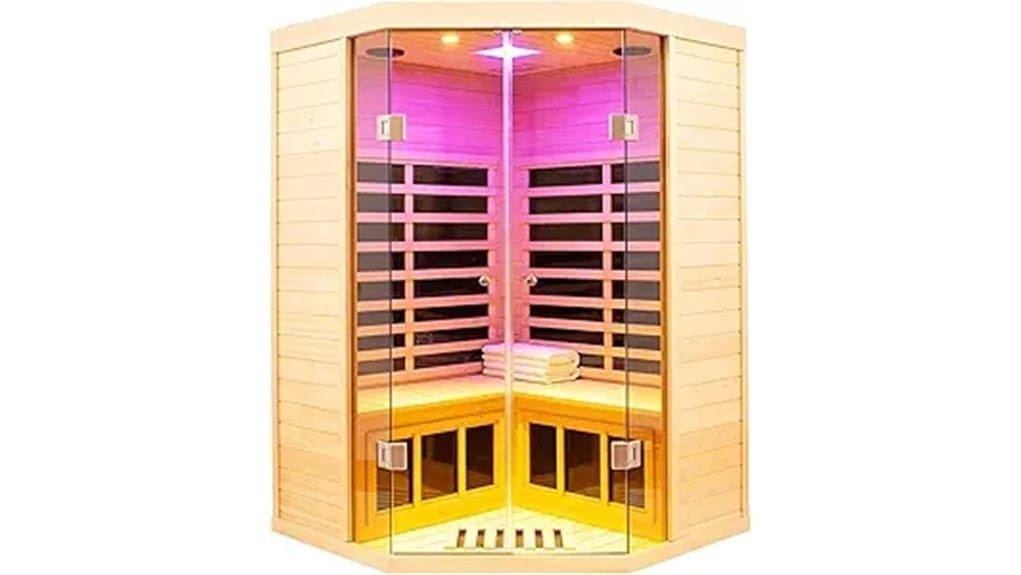
A 2–3 person infrared sauna gives you compact corner-friendly dimensions, seating for two to three with ergonomic support, and practical fixtures like cup holders and towel racks. Look for carbon-crystal plates for even heat, low EMF ratings, and fast preheat times to save energy. Prioritize mood lighting, Bluetooth audio, LED reading lamps, and safety features such as timers, dry-burn protection, leakage safeguards, and emergency shutoffs. Keep going and you’ll find model matches, placement tips, and buying trade-offs.
Some Key Takeaways
- Choose a corner-style 2–3 person unit to maximize space efficiency while preserving visibility and premium appearance.
- Prioritize carbon crystal infrared heaters for even surface heat, fast warm-up, and longer lifespan.
- Check low-EMF ratings, dry-burn protection, and leakage/explosion-proof electrical safety features.
- Look for mood lighting, Bluetooth audio, LED reading lamps, and aroma infusion for comfort and wellness.
- Verify installation clearance, GFCI-protected outdoor circuits, accessible controls, and a clear emergency shutoff.
What a 2–3 Person Infrared Sauna Actually Offers (Size, Capacity, and Key Features)
Although it fits neatly into a corner, this 2–3 person infrared sauna still provides a roomy interior at 47.2 x 47.2 x 74.8 inches, so you can sit comfortably with a partner or two without feeling cramped. You’ll find ergonomic seating that supports posture during sessions, plus a cup holder and towel rack for practical use. The corner-style glass enhances visibility and a high-end appearance. Built-in aroma infusion options and adjustable temperature controls let you tailor the environment to guests’ needs. Evidence-based safety features include timers, dry-burning and leakage protections, making it suitable for home placement and shared service. Consider pairing it with a gazebo kit to create a charming backyard oasis and extend your relaxation space outdoors.
How Infrared Heating and Performance Compare: Carbon Crystal Plates, EMF, and Preheat Times
When comparing infrared heating systems, focus first on the heater type, EMF output, and warm-up speed, because those three factors determine how evenly and quickly you’ll feel therapeutic heat. You’ll note carbon crystal plates often offer consistent surface temperatures and good carbon fiber efficiency, distributing far-infrared wavelengths gently across the body. Low EMF ratings matter for long sessions; choose units verified within low EMF ranges. Fast preheat times—like a 10-minute quick warm-up—reduce idle energy use and improve usability. Also check independent heater lifespan testing and warranty data so you can confidently recommend durable, effective units to those you serve. Consider also how these saunas complement outdoor living areas and smart home setups with smart controllers that integrate temperature scheduling and energy management.
Comfort, Wellness, and Entertainment Features to Prioritize (Lighting, Speakers, Lamps, Cup/Towel Holders)
Think about the features inside an infrared sauna as the things that keep you comfortable, safe, and engaged during a session: good lighting, reliable speakers, reading lamps, and simple storage like a cup holder and towel rack all add measurable utility. You’ll prioritize mood lighting with adjustable color therapy to support relaxation and circadian-friendly sessions. Choose immersive audio via Bluetooth speakers for guided meditations or communal playlists. Two LED reading lamps improve reading comfort without overheating. Simple fixtures—cup holders and a towel rack—ensure hydration access and tidy shared use. These practical choices maximize wellness benefits and make serving guests effortless. Also consider adding waterproof Bluetooth speakers to bring outdoor-quality sound into your home sauna experience.
Safety, Controls, and Protections to Check Before You Buy (Timers, Dry-Burn, Leakage, Explosion-Proof)
Keeping mood lighting, speakers, and storage in mind won’t help much if the sauna’s safety systems and controls aren’t up to par—those features keep sessions both comfortable and risk-free. You should verify an automatic timer, adjustable temperature controls, and dry-burn protection to prevent heater damage and fire risk. Confirm leakage protection and explosion-proof design for electrical and material safety. Look for clearly labeled emergency shutoff and accessible child locks if children may access the area. Prioritize models with straightforward panels and documented test results or certifications so you can confidently offer safe, reliable sessions to those you serve. Also consider installing outdoor GFCI breaker gear for ground-fault protection when saunas are placed near outdoor living spaces.
Which Model Fits Your Space and Budget: Placement, Dimensions, and Quick Recommendations for Common Use Cases
Although space and budget both shape your choice, start by matching the sauna’s dimensions and capacity to the room and intended use: a 47.2″ x 47.2″ x 74.8″ corner-style unit seating 2–3 people suits master bathrooms, basements, small home gyms, or paired bedroom setups where a compact footprint and corner installation maximize floor space. For space planning, measure clearance, ventilation, and electrical access. For service-oriented buyers, pick models with accessible controls and easy maintenance. Consider budget tiers: entry-level focuses on essentials; mid-tier adds comfort features like LED reading lamps and Bluetooth; premium includes superior glass design and faster preheat. Prioritize safety and support. Also consider how the sauna complements your outdoor living plans, especially if you already use a six-person hot tub or other backyard amenities.
Some Questions Answered
Do Infrared Saunas Require Special Electrical Wiring or Outlets?
Yes — you’ll usually need dedicated circuits and to confirm voltage compatibility. Check the sauna’s power rating and required voltage (often 120V or 220–240V); smaller units may plug into standard outlets, larger ones often need a hardwired circuit and qualified electrician. You’ll want safe installation, proper breaker sizing, and grounding. Prioritize user safety and follow local codes; contact customer support or an electrician to verify requirements before installation.
How Long Is the Typical Manufacturer Warranty Period?
Typical warranty length is usually 1–5 years, depending on the manufacturer. You’ll want to check coverage details for heater elements, electronics, and cabinet structure; many companies cover parts for one to three years and offer longer warranties on frames or heaters up to five years. Inspect exclusions for wear, misuse, and installation. If you serve others buying one, confirm response time for claims and whether labor or shipping are included.
Can Essential Oils or Aromatherapy Be Used Inside the Sauna?
Yes — you can use essential oils for aroma diffusion, but you’ll want to prioritize oil safety. Don’t apply oils directly to heaters or wood; instead use a water-safe diffuser placed away from heaters or add a few drops to a damp towel on a lower bench. Test scents for sensitivity and ventilate after sessions. Follow manufacturer guidance, avoid combustible carriers, and advise others about allergies or respiratory issues before use.
Are Assembly and Delivery Included or Charged Separately?
Delivery fees and assembly options vary by seller; you’ll often pay separate delivery fees while some retailers include basic delivery. You can choose paid assembly options if you’d rather have professionals install the unit, or opt for DIY to serve your budget. Check the vendor’s policy and ask about on-site setup, parts handling, and warranty activation. Confirm timelines and any additional charges before purchase to support others responsibly.
Do Infrared Saunas Increase Home Humidity or Affect HVAC Systems?
No — infrared saunas produce minimal humidity impact because they heat your body directly, not the air, so they won’t markedly raise home moisture. You should still ventilate the room to avoid minor condensation and odors. HVAC interaction is limited; your system won’t work harder to remove steam, but make certain adequate air exchange and check room sealing. If you’re serving others, inform them about ventilation and simple HVAC checks for comfort and safety.


